Tutorial 7: Putting Bones Together
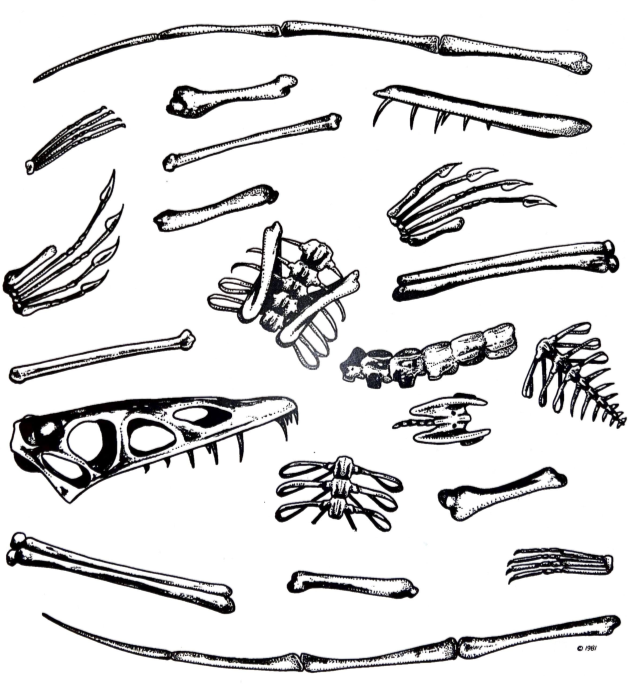
The fossilized remains of the animal illustrated in Figure 1, below, were found in a limestone quarry in Germany in 1826. About one hundred and fifty million years ago, the quarry was a deep ocean lagoon. Organisms that died and sank to the bottom of the lagoon were buried by fine particles of lime mud. Fine details of organisms were preserved in the limestone. Water currents did not redistribute skeletons.
Georg August Goldfuss was the scientist who found this specimen. He cut out a slab of limestone with the fossil and took it to his laboratory for study. Goldfuss reconstructed the bones of the fossil animal, and then put the bones together to form a complete skeleton in a lifelike posture.
The purpose of this activity is for you to try to solve the very same mystery Goldfuss confronted. First, try to assemble the skeleton using modern skeletons as analogues. What did the assembled skeleton of this fossil animal look like? And then: What kind of life did this animal live in Germany about 150 million years ago?
Objectives
- Reconstruct the skeleton of the mystery fossil. Describe the process you used to put the skeleton together. Be very detailed here. Give a step-by-step recounting of your process (including possible mistakes), and rationales as to why.
- Make inferences about what the fossil animal looked like when alive, what food it ate, and its mode of transportation.
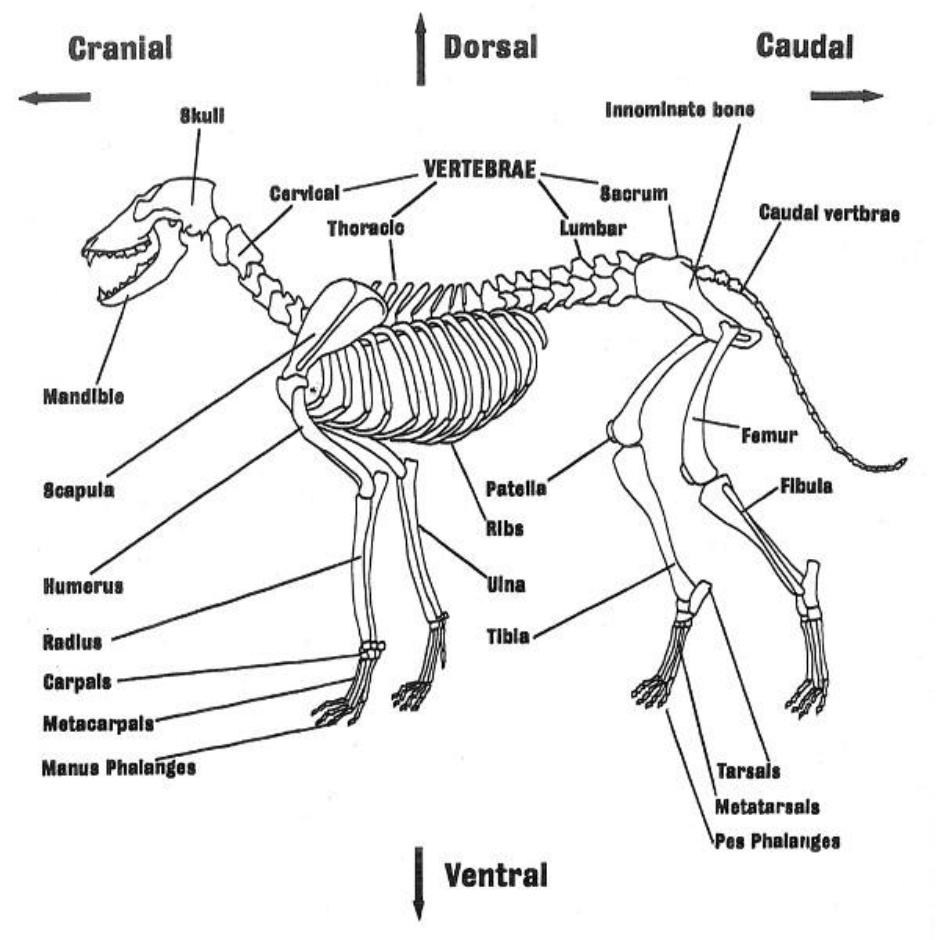
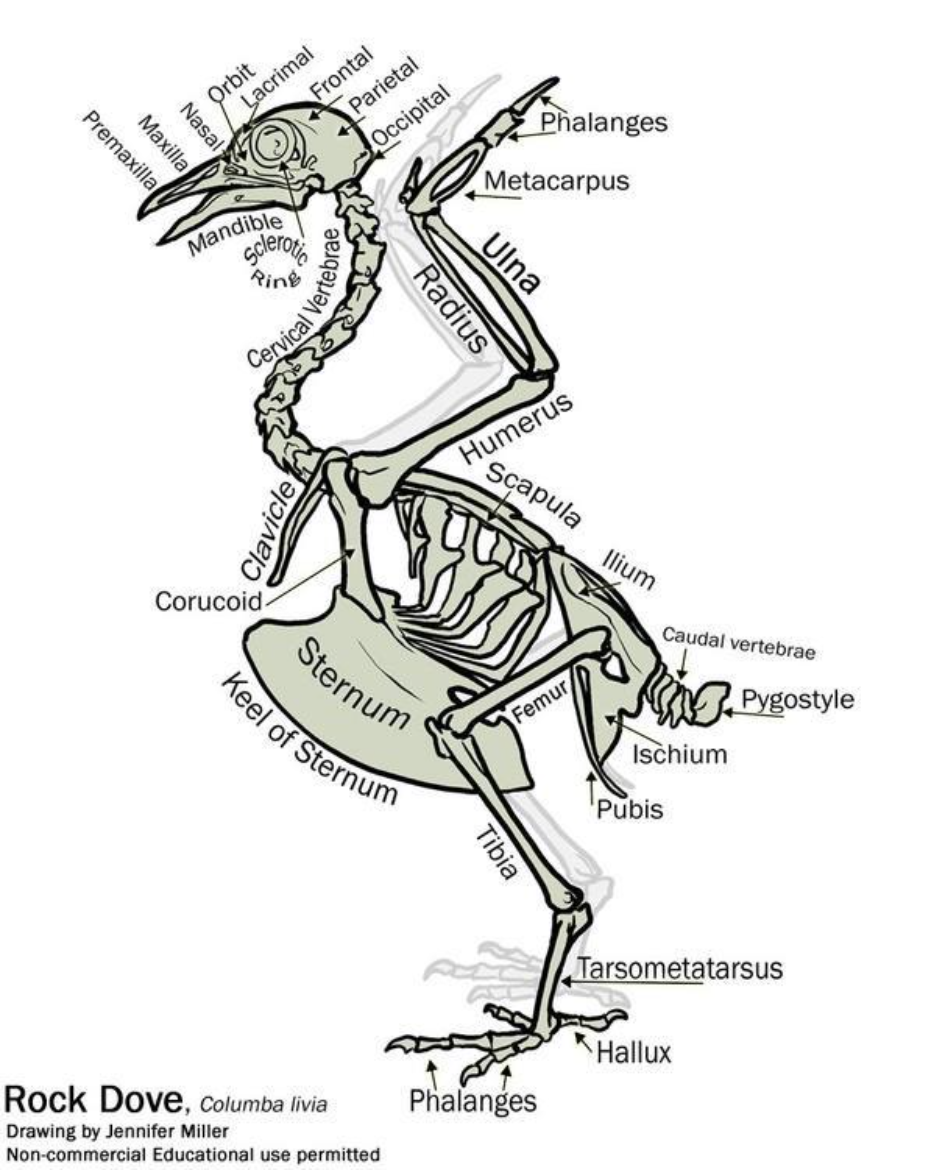
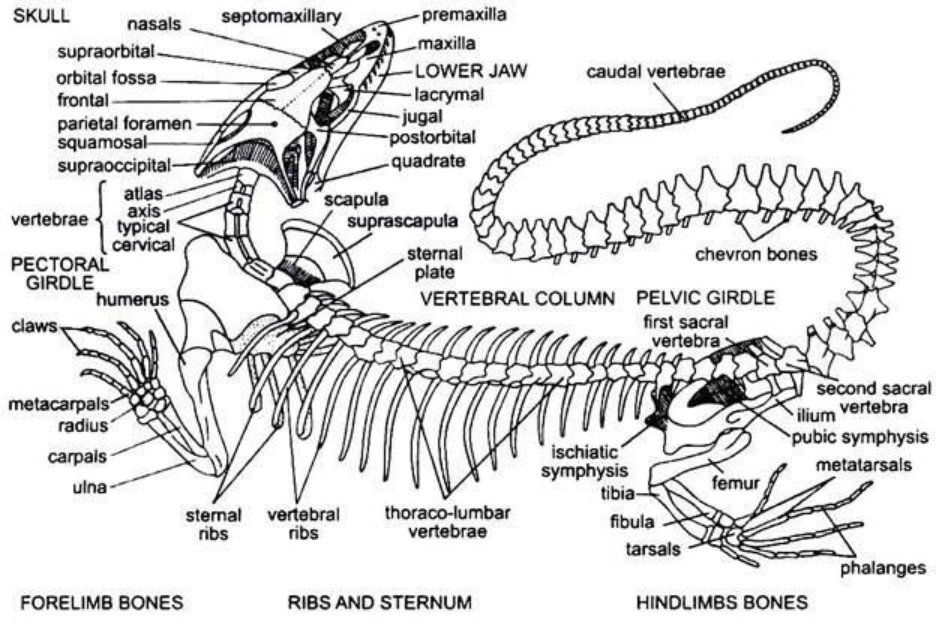
Use your knowledge about vertebrate skeletons and if available, the pictures of skeletons of such familiar as mammals, birds, and lizards.
When your skeleton is assembled to your satisfaction, fix it in position by taping the bones together. Take a picture of your assembled animal and attach it to your submitted document.
Analysis
- How tall was the animal?
- How wide was the animal when spread out?
- Most animals barely float in water (meaning they are bout the same density, 1g/cm3). Knowing the approximate volume of the animals and the density of water, what do you estimate the weight of the animal to be?
- Where did the very long bones go in the skeleton? What was the probable function of those bones?
- What modern animals do you think this fossil was most like? Explain.
- In what ways does it appear to have differed from those modern animals that may live like it did?
- When looking at the teeth and jaw of the animal, what can you infer about its feeding habits? Explain your answer.
- How do you explain the large open spaces in the skull, and the hollow long bones?
- How do you explain the small feet with tiny claws and the large hands with large claws?
- Was this animal a dinosaur? Why or why not?
References
This activity was modified after Hansen, T., and Slesnick, I. (2006). Adventures in Paleontology: 36 Classroom Fossil Activities. NSTA Press: Arlington, VA.